Knowledge Center
Bioaugmentation: A Technical Guide for Industrial Biological Wastewater Treatment
What Is Bioaugmentation?
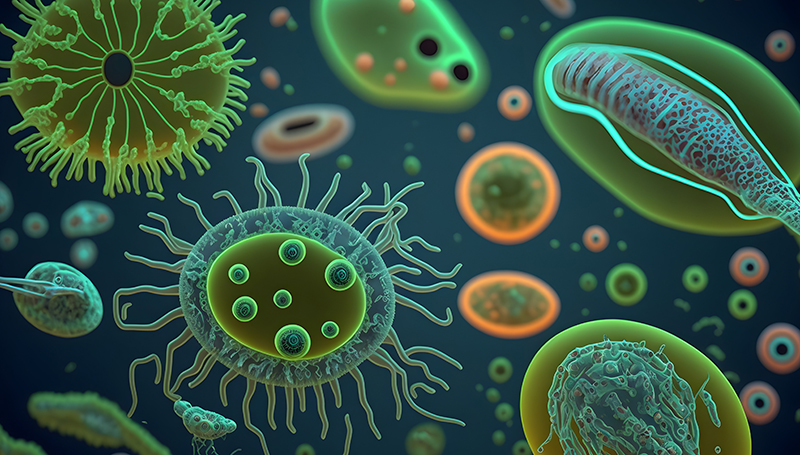
Bioaugmentation is the practice of adding concentrated populations of beneficial microorganisms to a biological wastewater treatment system to improve or restore treatment performance. In industrial applications, these products are most commonly supplied as dry, shelf-stable formulations containing dormant bacteria that activate when introduced to water.
The core idea is straightforward: biological treatment systems depend on a functioning microbial community to break down organic compounds, reduce nitrogen, and manage other contaminants. When that community is stressed, depleted, or mismatched to the waste stream, treatment performance suffers. Bioaugmentation supplements the native population with organisms specifically selected or adapted to perform under the target conditions.
How Biological Wastewater Treatment Works
Biological treatment systems — including activated sludge, sequencing batch reactors (SBRs), aerated lagoons, trickling filters, and membrane bioreactors (MBRs) — use microbial metabolism to convert dissolved and suspended organic matter into carbon dioxide, water, and biomass. The microorganisms responsible are a complex, mixed community of bacteria, along with protozoa and other organisms that graze on bacteria and contribute to effluent clarity.
The efficiency of this community depends on maintaining the right balance of nutrients, oxygen, pH, temperature, and organic loading. Disruptions to any of these factors — or the introduction of toxic or unfamiliar compounds — can damage the microbial population and degrade treatment performance, sometimes rapidly.
Why Systems Need Bioaugmentation
Toxic shock events: Slug loads of biocides, solvents, heavy metals, or other inhibitory compounds can kill off significant portions of the active biomass. Recovery through natural regrowth alone can take weeks.
Seasonal loading changes: Food and beverage processors, agricultural facilities, and other industries with seasonal production cycles may overwhelm their biological system with high-strength influent during peak seasons after a period of low loading.
System startup and restarts: New systems, systems returning from shutdown, or systems that have lost biomass through a wasting event need to build an active microbial population before they can treat to permit requirements.
Difficult-to-degrade compounds: Some industrial waste streams contain compounds — fats, oils, and greases (FOG); complex carbohydrates; specific organic chemicals — that the native microbial community degrades slowly or incompletely. Specialized organisms can accelerate degradation.
Nitrification upsets: Nitrifying bacteria are slow-growing and particularly sensitive to pH swings, temperature drops, and toxic inhibition. Loss of nitrification is one of the most common biological treatment failures and one of the most valuable targets for bioaugmentation.
Sludge bulking: Filamentous bacteria can overgrow in activated sludge systems under certain conditions, producing a low-density sludge that settles poorly and carries over into the effluent. Some bioaugmentation products include organisms that compete with filamentous bacteria and help restore proper floc structure.
Dry Bacterial Products: Form and Function
Dry bioaugmentation products are manufactured by growing target microorganism strains under controlled conditions, then removing moisture through freeze-drying (lyophilization) or spray-drying while the cells are in a protective dormant state. The result is a stable, concentrated powder or granule that can be stored at room temperature for months to years without significant loss of viable cell count.
When introduced to water, the dried cells rehydrate and begin metabolic activity within minutes to hours depending on the species and formulation. This makes dry products practical for industrial use — they can be inventoried, handled without refrigeration, and dosed as needed without the logistics of managing liquid cultures.
Cell counts in dry bacterial products are typically expressed as colony forming units per gram (CFU/g). High-quality products contain 10 billion to 100 billion CFU/g or more. Species composition and suitability to the target application matter more than raw cell count.
Types of Organisms Used
Heterotrophic bacteria are the workhorses of BOD and COD reduction. They metabolize a wide range of organic compounds and form the bulk of the active biomass in most aerobic treatment systems.
Nitrifying bacteria, specifically Nitrosomonas (ammonia to nitrite) and Nitrobacter or Nitrospira (nitrite to nitrate), are slow-growing and among the most difficult to maintain in industrial systems. Concentrated dry nitrifier products are particularly valuable for rapid restoration of ammonia removal capability following an upset.
FOG-degrading bacteria produce lipases, proteases, and other enzymes that break down fats, oils, greases, and proteins. These are commonly used in food processing wastewater, grease traps, and lift stations.
Hydrocarbon degraders are used in petroleum-impacted wastewater and groundwater treatment systems. Specialized strains metabolize alkanes, aromatics, and other petroleum constituents.
Anaerobic consortia are used in anaerobic digesters, septic systems, and anaerobic lagoons. These products contain methanogens and fermentative bacteria that support biogas production and organic stabilization under oxygen-free conditions.
Application and Dosing
Dry bacterial products are typically dissolved in warm, dechlorinated water before addition to allow initial rehydration and activation. The solution is then metered into the aeration basin, equalization tank, or other treatment unit at a point of good mixing.
Shock or restoration dosing involves a concentrated initial dose applied over a short period (typically 5 to 10 days) to rapidly rebuild the target population following an upset or during system startup.
Maintenance dosing is a lower, continuous or periodic dose applied to sustain a target organism population in systems with conditions that limit natural regrowth — cold temperatures, low retention times, or challenging waste chemistry.
Critical factors for success:
- Chlorine and biocides must not be present in the rehydration water or receiving basin. Even trace chlorine will kill dormant bacteria before they can establish.
- Nutrients (nitrogen and phosphorus) must be available in sufficient quantity to support microbial growth.
- pH and temperature affect activation rate. Most products perform best between pH 6.5 and 8.5 and temperatures above 10 degrees C.
- Hydraulic retention time (HRT) must be long enough for added organisms to establish before being washed out.
Evaluating Performance
Results are measured through standard biological treatment indicators:
- Effluent BOD, COD, TSS, and ammonia concentrations
- Sludge volume index (SVI) as an indicator of settleability
- Mixed liquor suspended solids (MLSS) and volatile suspended solids (VSS) trends
- Microscopic examination of sludge for protozoan activity and floc structure
Track results over 2 to 4 weeks minimum. Biological systems respond more slowly than chemical treatment processes.
Common Industrial Applications
- Activated sludge system startup and recovery after toxic events
- Ammonia permit compliance following nitrification upsets
- FOG management in food and beverage processing wastewater
- Grease trap and lift station maintenance
- Seasonal loading management in batch-production facilities
- Anaerobic digester startup and performance improvement
- Lagoon and pond treatment where aeration and mixing are limited

Let’s start with your system.
Because every facility is different, our best insights come from an on-site evaluation. Click below to request a site survey — one of our Technical Engineers will reach out to schedule a visit.