Knowledge Center
Boil Out & Cleaners
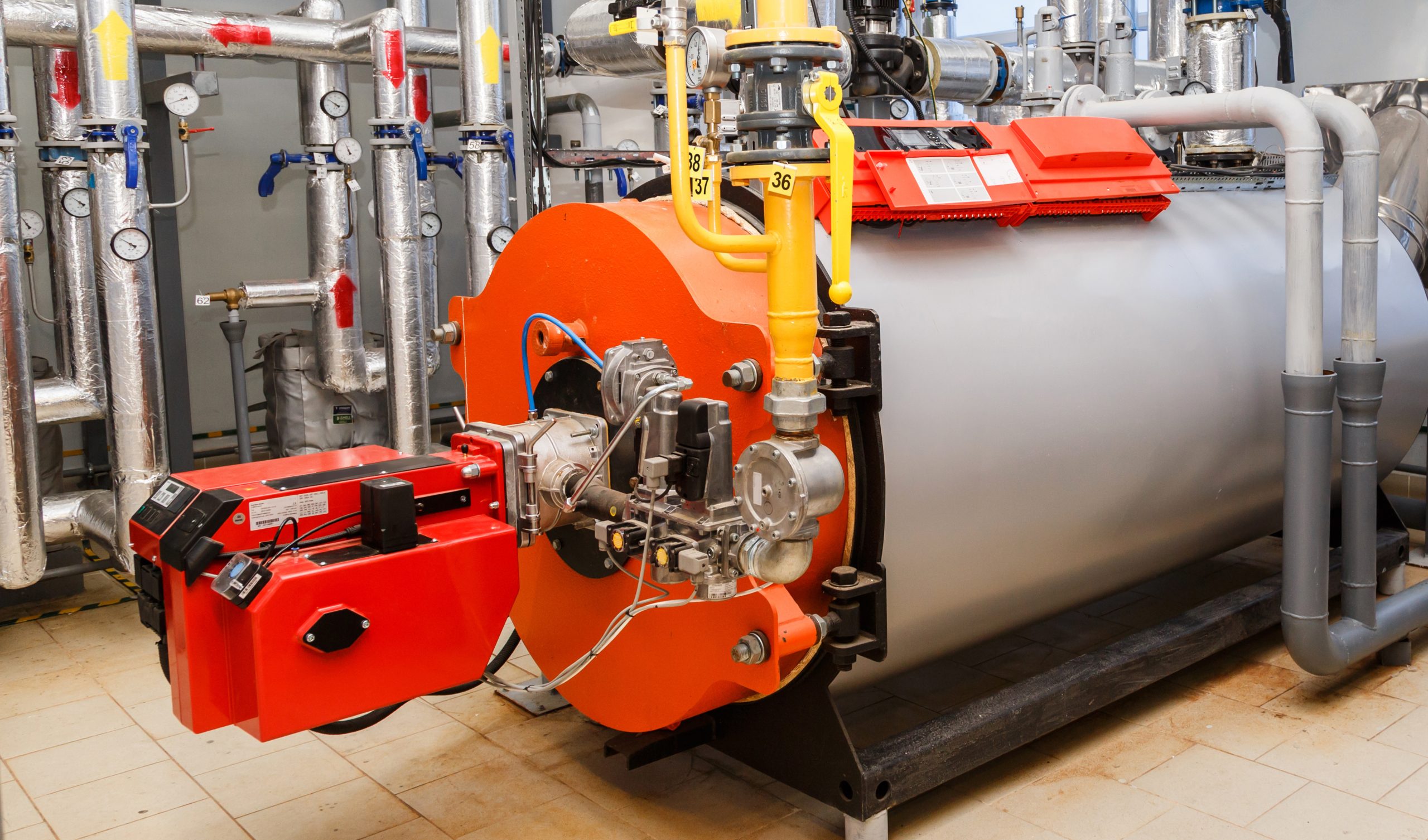
New boilers are not clean. The manufacturing and installation process leaves behind mill scale, oils, greases, and construction debris on internal metal surfaces. Existing boilers accumulate scale, iron oxide deposits, and hardness sludge over operating cycles. Before a boiler is commissioned for the first time, or when deposit accumulation has degraded performance, chemical cleaning is required to bring the system to an acceptable baseline condition.
Why Internal Cleaning Matters
Contaminants on boiler heat transfer surfaces create problems that compound over time:
- Mill scale on new steel is brittle and spalls during initial thermal cycling, generating iron particles that circulate in the system and contribute to deposits in headers and drums
- Oils and greases from manufacturing prevent chemical treatments from making contact with the metal surface, compromising corrosion inhibitor and scale inhibitor effectiveness and cause foaming in the boiler.
- Hardness scale from poor water quality significantly reduces heat transfer efficiency and creates hot spots, localized areas of elevated tube temperature that eventually cause tube failures
- Iron oxide deposits from corrosion accumulate in low-flow areas and under-deposit zones, creating conditions for localized under-deposit corrosion
A thorough initial boil-out establishes a clean baseline from which ongoing water treatment can be most effective. Trying to maintain a contaminated boiler with chemistry alone is an uphill battle.
Alkaline Boil-Out
Alkaline boil-out is the standard procedure for new boiler commissioning and for general deposit removal in operating boilers. It uses a solution of caustic soda (sodium hydroxide), soda ash (sodium carbonate), or purpose-formulated alkaline cleaning compounds to:
- Saponify oils and greases, converting them to water-soluble soaps that can be flushed from the system
- Loosen and disperse soft scale and deposits
- Passivate steel surfaces by maintaining a high-pH environment that promotes formation of a protective magnetite layer
Procedure overview: The cleaning solution is mixed to the manufacturer’s recommended concentration and introduced to the boiler. The boiler is then operated at low fire (typically below 25 percent of rated capacity) for 12 to 48 hours while the solution circulates and reacts with deposits. Periodic blowdown during the boil-out removes loosened material. After the cleaning period, the boiler is drained, flushed thoroughly with clean water, and refilled for normal operation.
For new boilers, the alkaline boil-out also serves to establish the initial magnetite passivation layer on steel surfaces, the protective iron oxide film that, once formed, significantly slows ongoing corrosion in normal operation.
Acid Cleaning
When hard mineral scale is present, particularly calcium carbonate, calcium phosphate, or iron oxide deposits that have hardened and sintered onto tube surfaces, alkaline treatment alone will not remove it. Acid cleaning is required.
Inhibited hydrochloric acid (HCl) is the most common acid cleaning agent for boilers. Inhibitors are added to the acid solution to protect base metal from attack while the acid dissolves mineral scale. Phosphoric acid is used in some applications, particularly where chloride discharge is a concern or where the scale composition favors phosphoric acid’s effectiveness.
Acid cleaning is a more complex and higher-risk procedure than alkaline boil-out:
- Concentration and temperature of the acid solution, contact time, and solution chemistry must be controlled carefully to maximize scale removal without attacking the underlying metal
- The procedure generates hydrogen gas, requiring adequate ventilation and elimination of all ignition sources in the area
- Spent acid and dissolved metals require appropriate neutralization and disposal in accordance with local regulations
- Acid cleaning should not be performed on boilers with significant surface defects, stress cracks, or areas of advanced corrosion without engineering assessment
Acid cleaning is always followed by a thorough water rinse, then either an alkaline passivation step or immediate startup with chemical treatment, to neutralize any residual acid and protect the freshly cleaned metal surfaces from flash corrosion.
Passivation
Passivation is the process of forming a stable, protective oxide layer on freshly cleaned steel surfaces. After acid cleaning, metal surfaces are extremely reactive, iron that has been exposed by scale removal is highly susceptible to rapid corrosion if not protected quickly.
Chemical passivation is typically accomplished with a dilute sodium nitrite or sodium hydroxide solution circulated through the system after cleaning and rinsing. Some oxygen scavengers with passivating properties (such as DEHA) are also used in passivation protocols. The goal is to convert the reactive iron surface to a stable magnetite layer before the system is returned to service.
Specialty Cleaners
Beyond alkaline and acid cleaning, several specialty cleaning chemistries address specific contamination types:
- Biodispersants: Remove biological films (biofilm) from cooling water systems and some condensate systems
- Chelants (EDTA, NTA): Organic acids that complex with scale-forming minerals without the pH risks of inorganic acids, useful in systems where materials compatibility is a concern
- Solvent cleaners: For heavy oil or grease contamination that alkaline saponification alone cannot address
- Mechanical descaling aids: Used in conjunction with chemical cleaning when deposit thickness or hardness exceeds what chemistry alone can remove
Common Questions
How do I know when my boiler needs to be cleaned?
Key indicators include rising fuel consumption relative to output (scale reduces heat transfer, increasing fuel required to maintain steam production), elevated tube temperatures observed during operation, reduced steam capacity, physical deposit observation during internal inspection, and deposit weight analysis from tube samples. A deposit weight of 15 to 20 grams per square foot of heat transfer surface is often used as a threshold for recommending acid cleaning.
Can I perform boil-out and acid cleaning while the boiler is in service?
Alkaline boil-out can be performed at low fire on an operating boiler, though coordination with operations is required to manage steam demand during the procedure. Acid cleaning requires the boiler to be taken fully offline. Both procedures should be performed by personnel with experience in chemical cleaning operations, and manufacturer recommendations should be reviewed before proceeding.
What documentation should I keep from a boiler cleaning?
Document the cleaning chemistry used (product names, concentrations, volumes), operating conditions during cleaning (temperature, duration, blowdown frequency), rinse water quality at completion, and observations of deposit amounts and character. This documentation is valuable for tracking system condition over time and for demonstrating due diligence to insurers and inspectors.

Let’s start with your system.
Because every facility is different, our best insights come from an on-site evaluation. Click below to request a site survey — one of our Technical Engineers will reach out to schedule a visit.