Knowledge Center
Steam Line & Condensate Treatments
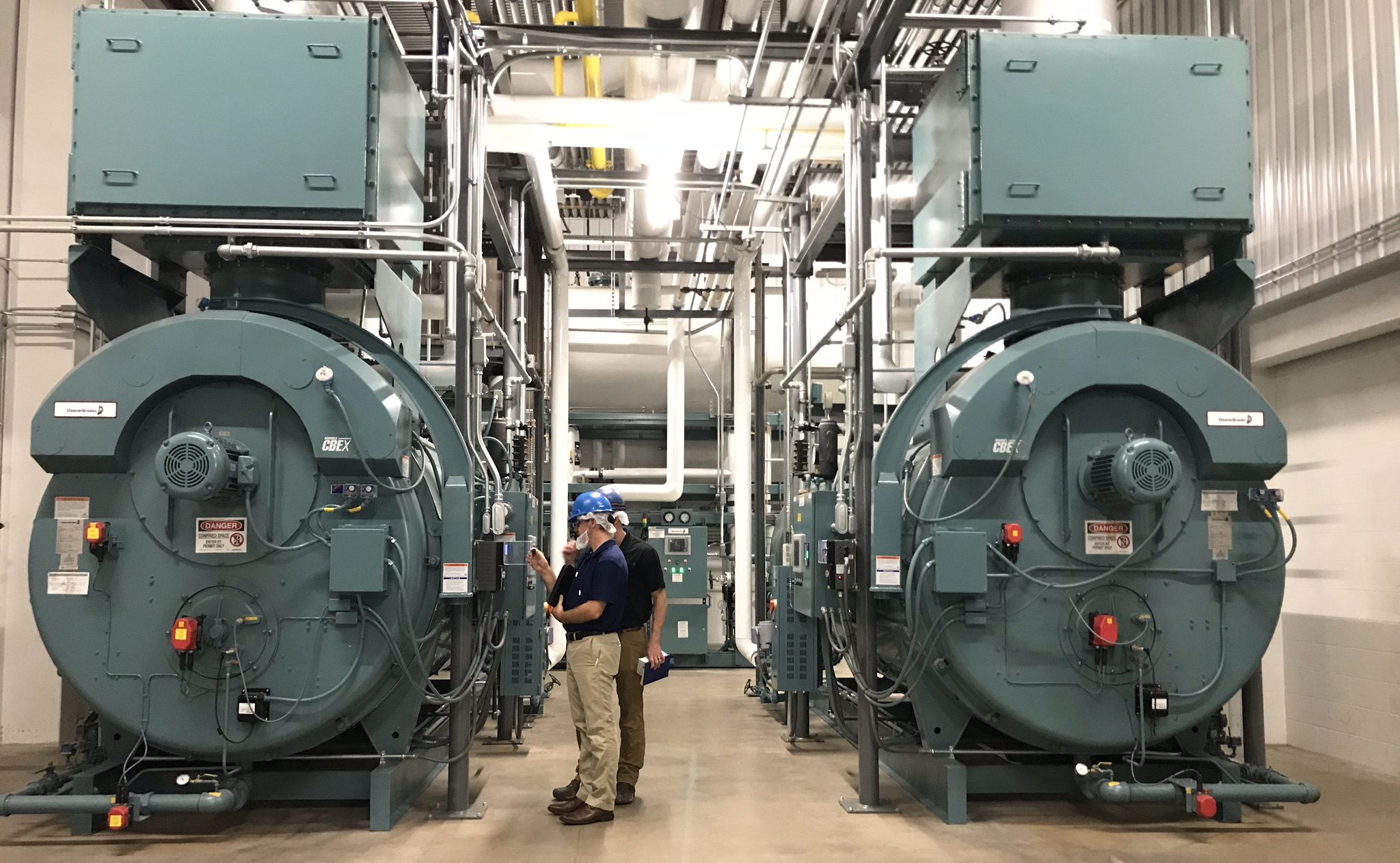
Steam systems don’t just distribute heat, they also carry water chemistry throughout a facility. When condensate returns to the boiler through a network of steam lines, condensate return piping, and receivers, it carries with it whatever dissolved gases and acids have formed along the way. Without proper treatment, carbonic acid attacks this piping from the inside, often for years before failures become visible.
How Corrosion Occurs in Steam and Condensate Systems
The primary culprit in steam and condensate corrosion is carbonic acid (H2CO3), formed when carbon dioxide (CO2) dissolves in condensate water. The CO2 originates from two sources:
- Bicarbonate and carbonate alkalinity in the boiler feedwater, which decompose under heat and pressure in the boiler to release CO2
- Dissolved CO2 that enters the system through makeup water or condensate receivers open to atmosphere
CO2 travels with steam through distribution lines and condenses with the water, dropping condensate pH to the 4.5 to 5.5 range in untreated systems. At these pH levels, steel piping corrodes aggressively, producing iron oxides that carry back to the boiler, deposit in the steam drum, and contribute to carryover and heat transfer fouling.
A secondary corrosion mechanism is dissolved oxygen, which can enter condensate return systems through failed steam traps, open vents, or at condensate pump packing. Oxygen in the condensate causes pitting, which is more destructive than the general corrosion caused by carbonic acid.
The damage often goes undetected because condensate piping frequently runs through walls, ceilings, or underground, until a return line fails and steam or hot condensate is released in an unexpected location.
Neutralizing Amines
Neutralizing amines are volatile organic bases that travel with steam through the distribution system and neutralize carbonic acid in condensate by raising the pH. They are the primary chemistry for managing carbonic acid attack in steam and condensate systems.
Common neutralizing amines include:
- Morpholine: Moderate volatility and good distribution throughout the system. pH range of roughly 8.0 to 9.0 in condensate. Widely used in industrial applications.
- Cyclohexylamine: Higher volatility than morpholine, making it effective in systems with long steam lines or where remote distribution points need protection. Raises condensate pH more aggressively.
- DEAE (Diethylaminoethanol): Intermediate volatility. Often blended with other amines to achieve broader distribution across the system.
- 2-AMP (2-amino-2-methyl-1-propanol): Lower volatility, particularly effective in protecting the condensate return near the boiler and heat exchangers.
In practice, most steam condensate programs use blended amine formulations rather than a single amine. Blending amines with different volatility profiles ensures that protection is distributed throughout the system, from the steam header close to the boiler to remote condensate return lines that may be many hundreds of feet from the treatment point.
The key performance target for neutralizing amines is condensate pH. Maintaining condensate pH in the 8.3 to 9.0 range at all sample points in the system is the primary control objective.
Filming Amines
Filming amines operate through a different mechanism than neutralizing amines. Rather than neutralizing acid, they form a monomolecular hydrophobic film on the interior surfaces of steam lines and condensate return piping, essentially waterproofing the metal surface so that condensate cannot make direct contact with it.
The film-forming compound most commonly used is octadecylamine (ODA), delivered in a carrier fluid because ODA itself has limited water solubility. The film is maintained by continuous dosing, as steam flow gradually strips it from surfaces.
Filming amines are particularly effective in:
- Systems where condensate pH alone cannot be raised to target levels due to high CO2 levels or system design constraints
- Systems with non-ferrous metals (copper, brass, copper-nickel) that may be sensitive to high pH targets required for carbon steel protection
- Turbine condensers and surface condensers where iron pickup in the condensate must be minimized
Filming amines should be used carefully, as overdosing can cause deposits that affect steam quality or contaminate products in process steam applications.
Program Monitoring
Effective condensate treatment relies on monitoring at multiple points in the system:
- Condensate pH: Measured at sample points throughout the return system. Deviation from targets in specific areas can indicate distribution problems, steam trap failures, or zones with higher CO2 load.
- Iron levels: Condensate iron is the most direct indicator of corrosion activity in the return system. Targets are typically under 0.1 ppm, and many well-controlled systems run consistently below 0.05 ppm.
- Copper levels: In systems with copper alloy equipment, condensate copper monitoring identifies corrosion of those components.
- Amine residuals: Confirms that active chemistry is reaching all sample points at effective concentrations.
Sample point selection matters. A single sample from the condensate receiver nearest the boiler may show good chemistry while remote return lines remain unprotected. A representative monitoring program includes multiple sample points at various distances and elevations from the boiler.
Common Questions
How do I know if my condensate return system is corroding?
The most common indicators are elevated iron in condensate samples, visible reddish-brown coloration in the condensate, and ultimately pipe failures. If your facility has experienced condensate line failures in certain areas of the plant, that is a strong signal that the system needs better treatment or monitoring. A condensate system survey, measuring pH and iron at multiple points, is the most direct diagnostic approach.
Will treating condensate affect steam purity?
Neutralizing amines are volatile compounds that travel with steam. They are generally recognized as safe for most industrial applications. In process applications where steam contacts food or pharmaceutical products, however, only certain amines are acceptable, and some applications require amine-free condensate treatment approaches. The applicable regulations and product contact considerations should be verified before selecting chemistry.
What happens to the amines when they reach the boiler?
Volatile amines that return to the boiler with condensate decompose under boiler operating conditions and exit with steam. They do not accumulate in the boiler water. Non-volatile components of amine programs (if any) would remain in the boiler water and count against dissolved solids limits.

Let’s start with your system.
Because every facility is different, our best insights come from an on-site evaluation. Click below to request a site survey — one of our Technical Engineers will reach out to schedule a visit.